What Are the Main Gaps Between the Average User and the Digital Dental Industry?
In the previous chapters of this series, we explored the gaps that exist in digital acquisition, information transmission, and the design process. We now arrive at the stage where every prior decision is finally tested against physical reality:
the Manufacturing Phase.
This is where a digital file becomes a restoration a patient will actually wear.
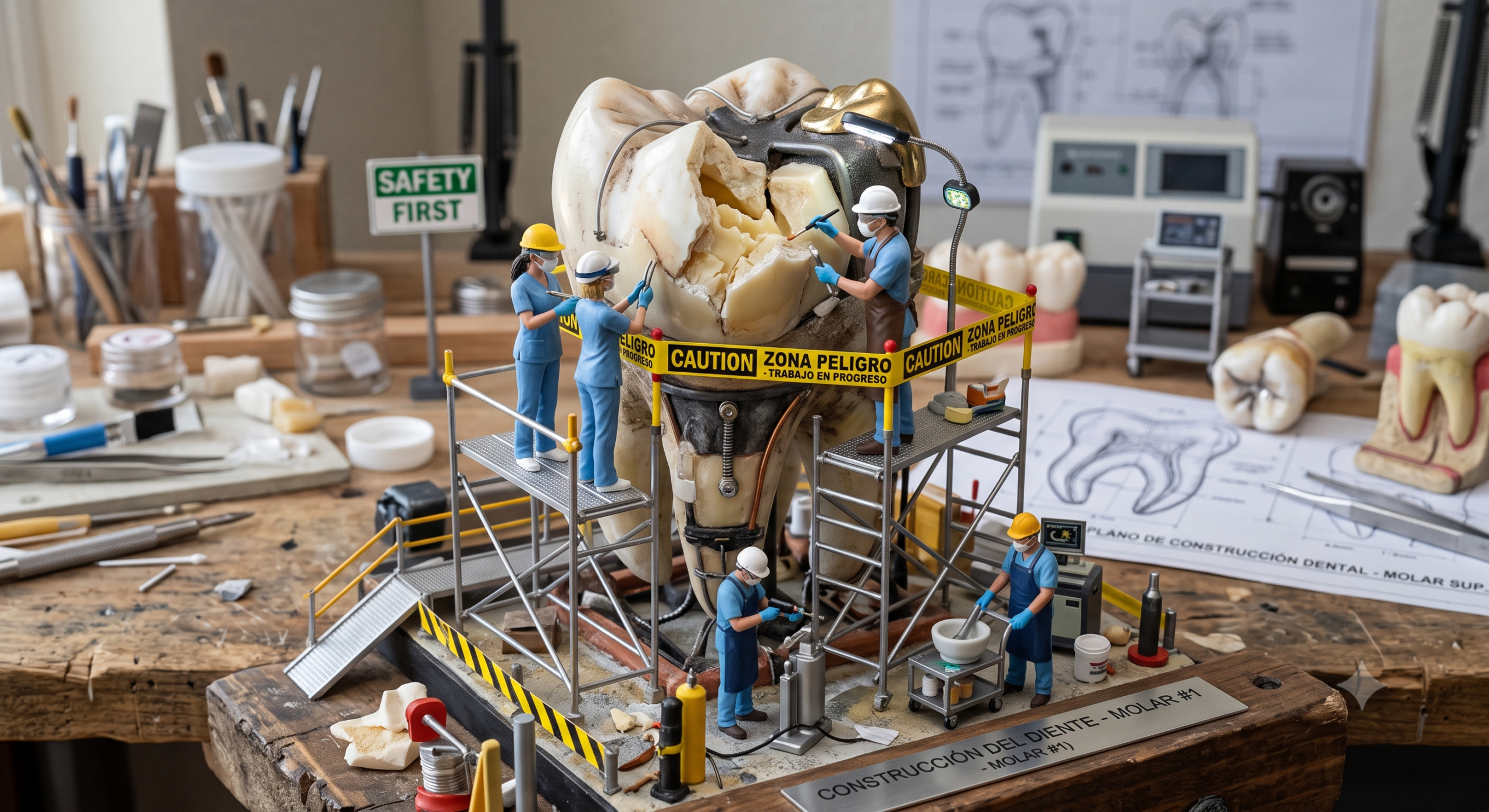
1. The Conceptual Gap: “Sending a File to Be Made” vs. “Selecting a Manufacturing Pathway”
The industry treats manufacturing as a decision tree: subtractive milling, additive 3D printing, or hybrid approaches, each with distinct indications. Many average users still think of it as a single, undifferentiated last step, “send it to be printed or milled”, without weighing which pathway actually suits the case.
2. The Gap in Understanding Manufacturing Phases
A restoration doesn’t simply get “made.” It moves through pre-manufacturing validation (nesting, support generation, tolerance checks), the manufacturing process itself, and post-processing, sintering, glazing, polishing, or curing. Many users are unaware that most manufacturing errors originate not in the machine, but in an overlooked phase before or after it.
3. The Material–Method Compatibility Gap
The industry matches material science to manufacturing method: zirconia sintering shrinkage, resin curing profiles, metal DMLS parameters. Average users often select a material for its aesthetics or cost, unaware that its manufacturing behavior, and the tolerances it demands, may be incompatible with the case at hand.
4. The Tolerance and Fit Gap
Digital design assumes precision; physical manufacturing introduces variance. Milling burs wear, printers calibrate differently, and sintering shrinkage must be compensated for in the design itself. Many users assume “digital” automatically means “exact,” overlooking that every manufacturing method carries its own predictable, and manageable, margin of error.
5. The Quality Control Gap
The industry validates output against the original design file before delivery. Many users skip this step entirely, trusting the process end-to-end without verifying that what was manufactured actually matches what was designed.
Central Synthesis
The largest gap is not “who owns a mill or a printer.” It is who understands that manufacturing is not a single event, but a chain of interdependent phases, each capable of preserving or destroying the precision built into every prior stage.
Our Perspective at WeCAD4You
Across seven years supporting clients worldwide, we have learned that a flawless design can still fail at the manufacturing stage if the pathway, material, and phase requirements aren’t respected. We work to keep that chain intact, from acquisition through final polish.
In our next and final chapter, we turn to something less measurable but equally critical: the artistic preferences that shape every digital design decision.
Stay tuned.
By Dr. Daslav Ilić
Prosthodontist
Co-Founder / Director of Operations