Walk into most modern dental practices and you’ll find an impressive stack of technology: an intraoral scanner from one manufacturer, design software from another, a mill or printer from a third, and a practice management system tying it all together, in theory. In practice, these systems often speak different digital languages, store data in proprietary formats, and resist the kind of seamless data exchange patients and clinicians assume is already happening. This gap between the promise of a connected digital workflow and the reality of fragmented systems has become one of the defining (and least discussed) challenges facing digital dentistry heading into 2026.
From buzzword to daily friction
For most of the past decade, digital dentistry’s story was one of individual breakthroughs: the first practical intraoral scanners, the first same-day milled crowns, the first dental-specific 3D printers. Each innovation was evaluated largely on its own merits. But as adoption has matured, a different question has moved to the center of industry conversation: not “does this technology work?” but “does this technology work with everything else?”
Rune Fisker, an early architect of 3Shape’s product strategy and a leading voice in digital dentistry forecasting, has named this dynamic directly in his widely circulated 2026 industry outlook, calling it a “hyper-(un)connected ecosystem”: more devices and platforms online than ever, yet true interoperability between them still elusive. His outlook lists this alongside AI agents, generative AI, intraoral scanning, and 3D printing as one of five defining 2026 themes, but unlike the others, it isn’t a technology to adopt. It’s a structural problem to solve.
Why this matters more for labs than for clinics
For a solo clinician, interoperability friction is often just an inconvenience: a file export needing reformatting, a scanner that only “prefers” one design software brand. For dental laboratories, the stakes are structurally higher. A lab’s business model depends on receiving clean digital impressions from dozens of clinics, each on a different scanner, and converting that data into a consistent, error-free pipeline across CAD design, milling, and 3D printing.
Industry coverage of 2026 trends consistently frames clinic-lab collaboration not around any single new technology, but around how well digital handoffs function between the two sides. As one industry analysis notes, 2026 innovation is less about radical new treatments and more about refining how established processes are planned, coordinated, and executed between clinic and lab. Interoperability is the connective tissue determining whether that coordination happens smoothly, or generates the remakes, delays, and miscommunications technicians quietly absorb as “normal.”
The AI complication
The interoperability problem is not static; it is being actively complicated by the next wave of AI adoption. As dental software incorporates AI agents capable of autonomously planning and executing multistep workflows (taking a scan, flagging a diagnostic concern, and initiating a treatment-planning sequence with minimal human triggering), the cost of disconnected systems rises sharply. An AI agent’s usefulness depends entirely on its ability to pull and push data across the full chain of tools in a case. Interoperability gaps don’t just slow a technician down; they can quietly break an automated pipeline in ways harder to notice until a case has already gone wrong.
This is precisely the kind of consequence that stays invisible to most clinicians, who interact with the finished software interface rather than the data architecture underneath it, but is a daily operational reality for lab technicians managing files from many referring practices at once.
Closing the knowledge gap
For clinicians, the takeaway is not technical mastery of data standards, but awareness: asking whether a new scanner, design tool, or AI feature integrates cleanly with the systems their lab already uses, rather than assuming any two “digital” tools will simply work together. For laboratory technicians, this is a professional recognition long overdue: an acknowledgment that solving format mismatches and manually bridging gaps between systems is not incidental overhead. It is skilled, largely uncredited technical labor keeping the ecosystem functional.
As digital dentistry’s toolset continues to expand, the practices and labs that thrive will not necessarily be the ones with the most advanced individual devices, but the ones that treat interoperability as a deliberate criterion in every purchasing and workflow decision, rather than an assumption that quietly fails until someone downstream has to fix it.
A practical bridge: software-agnostic design partners
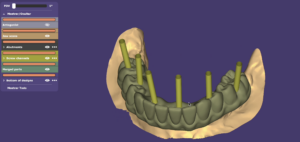
One emerging way labs and clinicians are absorbing interoperability friction, rather than waiting for the industry to solve it, is by working with outsourced CAD design partners built specifically to sit between mismatched systems. WeCAD4You, for example, positions itself as software-agnostic, meaning its design team works directly within a lab’s or clinic’s existing ecosystem (whether that is Exocad, inLab, 3Shape, or another platform), rather than requiring everyone to standardize on a single toolchain first. In practice, this shifts the burden of translating between formats and workflows away from in-house staff and onto a partner whose core expertise is exactly that translation layer. For a lab juggling files from clinics on different scanners, or a clinician whose in-house technician time is limited, this kind of partner does not eliminate the underlying interoperability gap, but it does make it someone else’s daily problem to manage, turning what would otherwise be lost hours reformatting files and correcting mismatches into a predictable, outsourced step in the production pipeline.
References
- iStar Dental Supply. (2026, March 5). Top Digital Dental Trends to Watch for in 2026. https://istardentalsupply.com/blogs/blog/top-digital-dental-trends
- 3Shape Blog. (2026, January 13). Top Digital Dental Trends to Watch for in 2026. https://www.3shape.com/en/blog/inspiration-on-dentistry/top-digital-dental-trends-to-watch-for-in-2026
- Katia Dental. (2026, January 23). Tendencias del sector dental en 2026: cómo cambia el trabajo en clínica y laboratorio. https://katiadental.com/tendencias-sector-dental-2026-clinica-laboratorio/
- Global Dental Laboratories. Dentistry Trends for 2026. https://www.globallabsusa.com/blog/blog5/
- WeCAD4You. Maximizing Precision: The Role of Dental CAD/CAM Software in Modern Labs. https://wecad4you.com/maximizing-precision-the-role-of-dental-cad-cam-software-in-modern-labs/
By Doctor Daslav Ilic