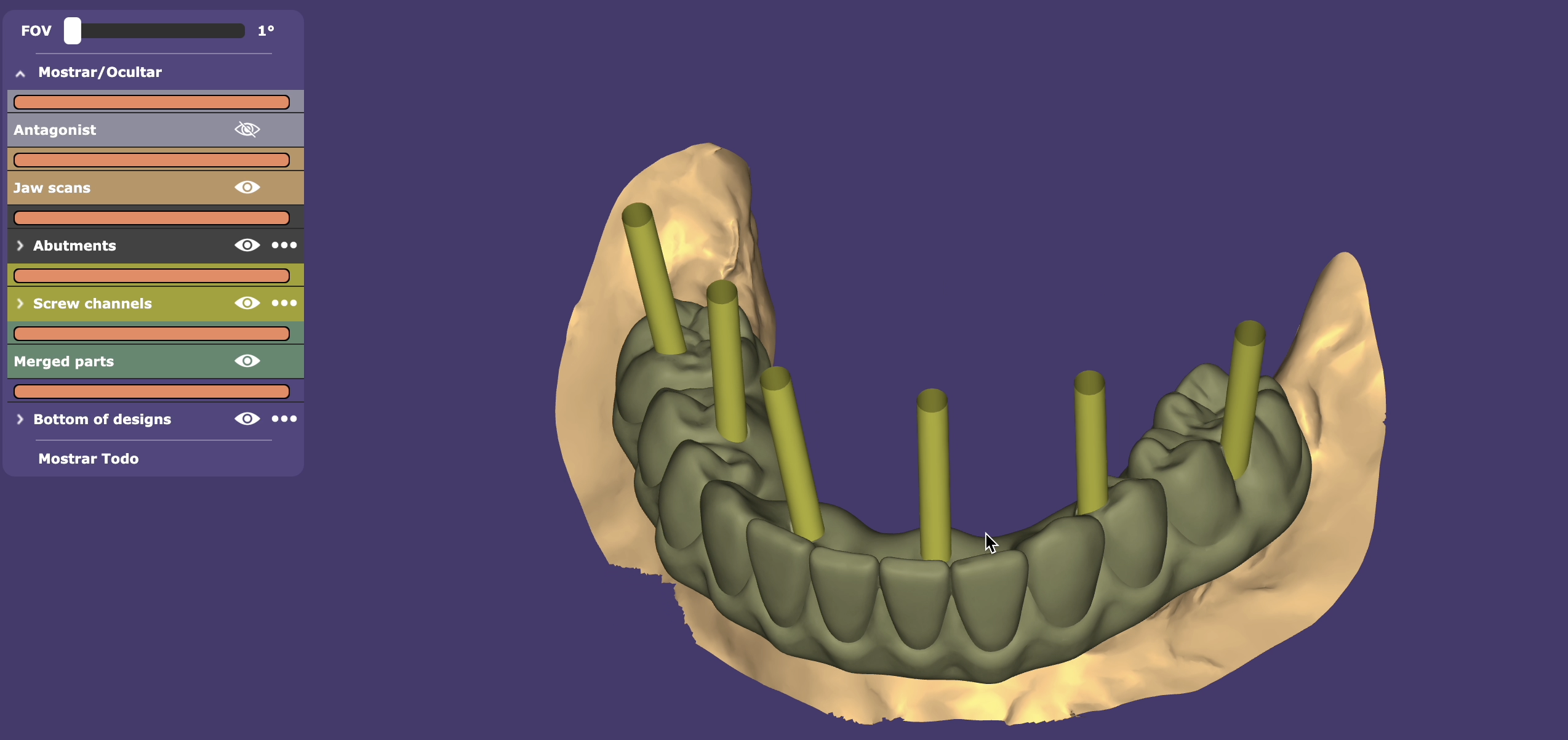
The dental laboratory industry has officially crossed the threshold from digital experimentation to mandatory automation. In 2026, a dental lab can no longer survive merely by owning an intraoral scanner or a basic milling machine. The true bottleneck and the ultimate competitive advantage lies entirely within your dental cad cam software infrastructure.
As generative AI, cloud-native ecosystems, and hyper-personalized aesthetics redefine restorative dentistry, lab owners face a critical question: Is your software architecture built for tomorrow, or is it anchoring you to legacy limitations?
At WeCAD4You, we map the trajectory of digital dental design. Here is how the digital dental landscape is shifting this year, and what your lab must do to stay ahead of the curve.
The shift from rigid tools to generative AI intelligence
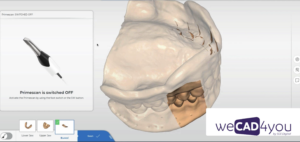
For years, dental CAD tools required meticulous, tooth-by-tooth adjustments. Technicians spent hours manipulating control points to achieve proper occlusion and marginal integrity.
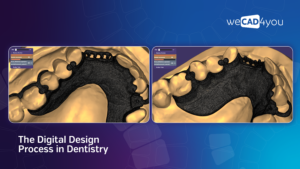
In 2026, the industry has shifted to generative AI design engines. Modern software no longer waits for manual input. Instead, it actively analyzes the patient’s unique craniofacial structure, adjacent dentition, and historical data to propose highly precise, ready-to-mill restorations in seconds.
- Predictive morphology: AI algorithms analyze thousands of successful clinical outcomes to predict the ideal occlusal morphology, reducing human error by up to 85%.
- Adaptive margin detection: Instead of relying on low-contrast visual data, cloud software now utilizes deep learning to identify margins with sub-micron accuracy, significantly reducing remakes.
For a forward-thinking smile design dental laboratory, this means shifting the staff’s role from tedious pixel-pushing to high-level quality control.
Cloud ecosystems versus desktop silos
The days of heavy local server installations, manual software updates, and fragmented file transfers are gone. The modern dental ecosystem relies on open, cloud-based architecture.
Legacy systems locked laboratories into proprietary hardware silos. If a clinic sent a scan from an unsupported intraoral device, the lab had to jump through technical hoops to convert the file. In 2026, leaders like WeCAD4You champion open-source data loops that ingest digital impressions natively, facilitating real-time collaboration between the clinician and the lab technician.
Comparing legacy systems to 2026 CAD/CAM architecture
| Feature | Legacy desktop software | 2026 Cloud-native software |
| Data processing | Local hardware dependent | Cloud-based parallel processing |
| Turnaround time | 3 to 5 business days | Same-day or next-day delivery |
| Collaboration | Static PDF and email exports | Real-time interactive 3D viewports |
| Material integration | Limited to vendor-approved discs | Open libraries for advanced hybrid zirconia and 3D polymers |
Elevating the smile design dental laboratory through emotional dentistry
The modern patient does not just want a functionally sound crown; they demand an aesthetic result that matches their personality and facial dynamics. This expectation has forced a massive evolution in the workflow of a premium smile design dental laboratory.
In 2026, high-end smile design has integrated 3D facial scanning and video tracking. Instead of designing a smile based on static 2D photos, modern dental cad cam software syncs the digital model with a live 3D rendering of the patient’s face.
- Dynamic phonetics: Software simulates how the teeth will look and sound when the patient speaks.
- Real-time patient engagement: Laboratories can send a secure, interactive 3D link directly to the clinician’s tablet, allowing the patient to view and approve their new smile before a single layer of zirconia is milled or printed.
This level of biometric integration bridges the gap between clinical expectations and laboratory execution, establishing your lab as a premium partner rather than a low-cost manufacturer.
Hybrid manufacturing and the 3D printing boom
The evolution of software has also transformed the production floor. While 5-axis milling remains the standard for high-strength zirconia frameworks, 3D printing polymers and resins have exploded in capability.
Modern CAD/CAM platforms natively manage hybrid workflows. The software can automatically split a complex full-arch case, directing the definitive prosthetic to a milling center while simultaneously routing the soft-tissue models and surgical guides to high-speed 3D printers. This automated distribution maximizes your machinery’s ROI and ensures zero idle time on the production floor.
Future-proof your lab with WeCAD4You
The digital dentistry market is magnifying its scale, driven by a growing demand for rapid, single-visit restorations and highly precise aesthetic outcomes. Labs that fail to adopt automated, cloud-based design workflows will inevitably face margin compression and labor shortages.
Future-proofing your business is not about buying more machines; it is about choosing the right software partner. WeCAD4You provides the infrastructure, AI-driven workflows, and open-ecosystem compatibility required to turn your lab into an agile, high-throughput digital powerhouse.
The future of dental design is already here. Let us build it together.
Frequently asked questions about modern dental software
What is the role of generative AI in dental CAD/CAM software?
Generative AI in dental software automates the creation of restorations by analyzing patient-specific anatomical data. It eliminates manual adjustments by predicting ideal occlusion, marginal placement, and morphology based on large clinical datasets.
How does a smile design dental laboratory use cloud technology?
A cloud-native smile design dental laboratory uses remote servers to process large 3D files instantly. This allows real-time file sharing, live 3D collaboration between doctors and technicians, and seamless updates without the need for high-end local computer hardware.
Why is open-architecture critical for dental CAD systems in 2026?
Open-architecture ensures that a dental laboratory can accept any file format, including STL, PLY, and OBJ, from any intraoral scanner on the market. This flexibility removes compatibility barriers, allowing labs to work with a broader network of dental clinics.